Index
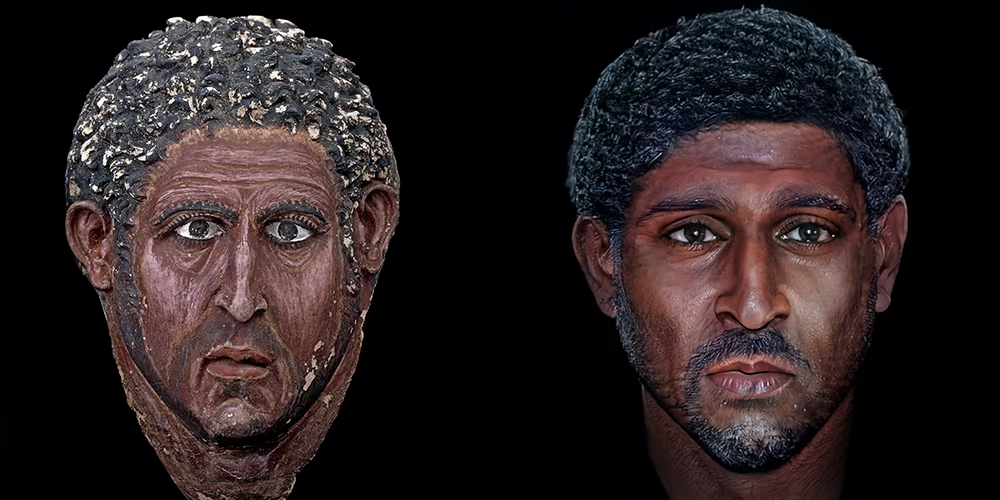
A side-by-side comparison of an ancient Fayum mummy portrait of a young man and a photorealistic interpretation generated by an AI.
AI · Art

Fayum Mummy Portrait Series

An artistic interpretation of naturalistic portraits from Roman Egypt

Each painting, dated between 1st and 4th century AD, was digitally restored in Photoshop (not shown) prior to input into the neural net.

The network used for this project, StyleGAN2, can be thought of as a vast, detailed map of possible 70,000 real human faces, known as FFHQ. The Artbreeder then acts like a GPS finding the “address” on its map of modern faces that most closely matches the features of the ancient one. Once that best-fit match is located, the portrait has a foothold in the network, allowing its features to be blended with the aesthetics of a modern photograph.
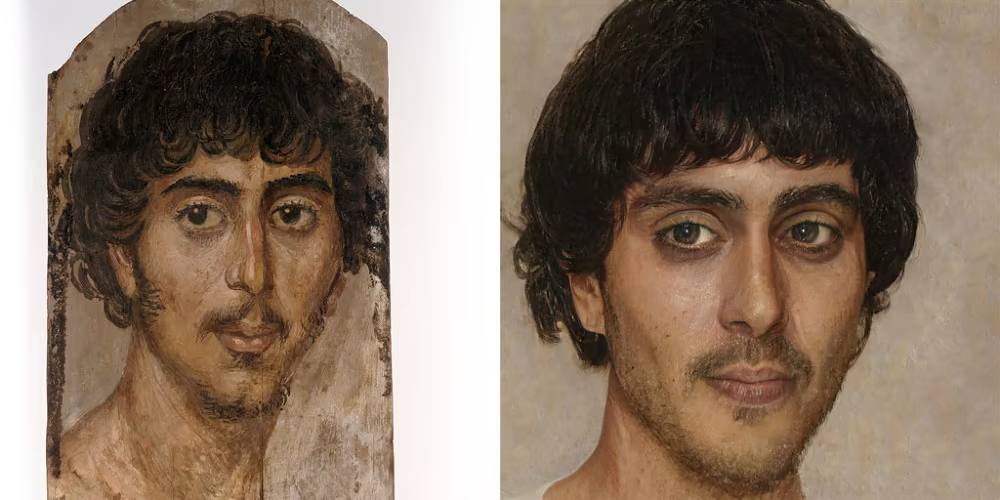
A photorealistic reinterpretation of a young man with curly hair and a beard, shown next to the original artifact.
This portrait of a young man with curly hair dates to around 150 CE. It was painted using the encaustic-wax technique on wood.[1]
A photorealistic reinterpretation of a mummy portrait of a young boy, shown next to the original artifact.
Mummy portrait of a boy, created with encaustic tempera on wood between 100-150 AD.[2]
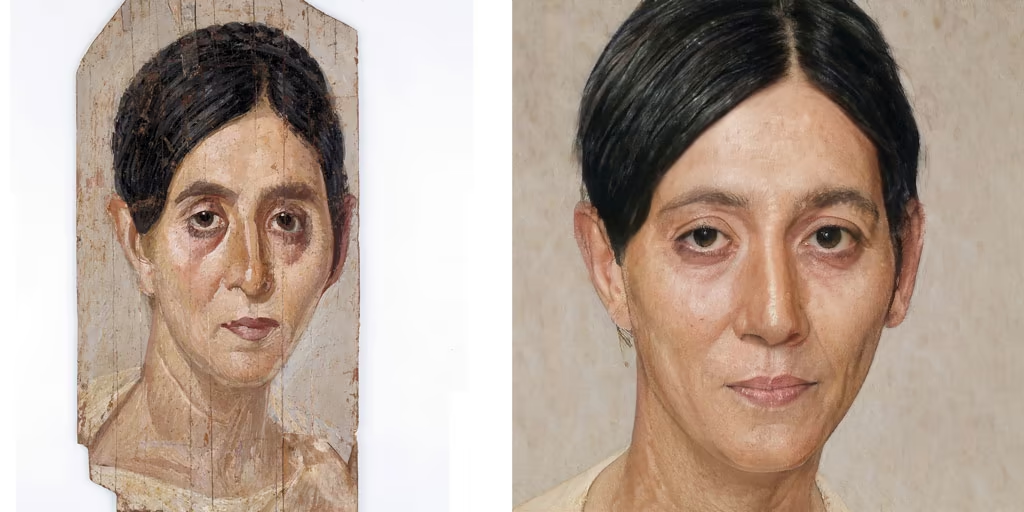
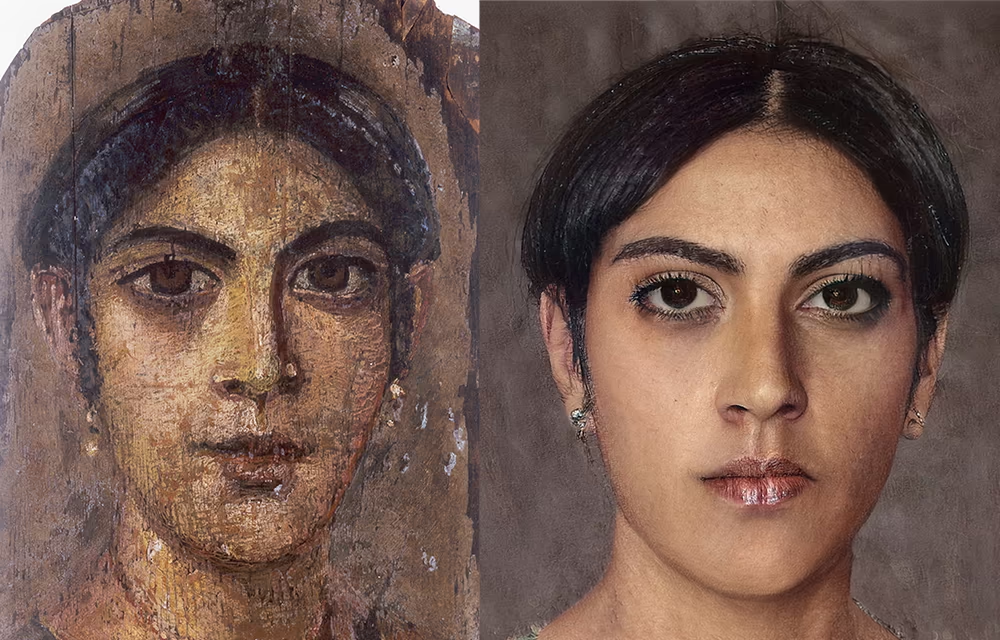
A photorealistic reinterpretation of a mummy portrait of an elderly woman, shown next to the original artifact.
This portrait of an older woman from Fayum is dated to approximately 150 CE. Altes Museum, Berlin.[3]
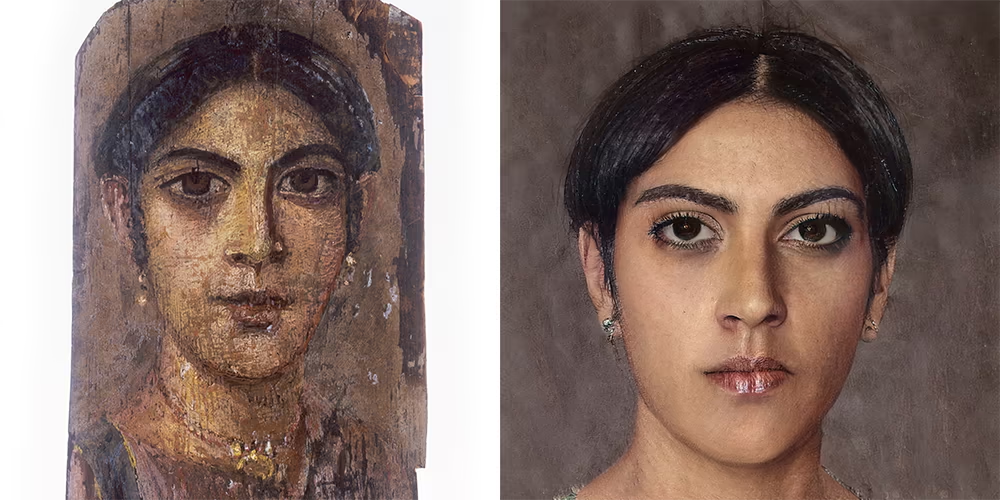
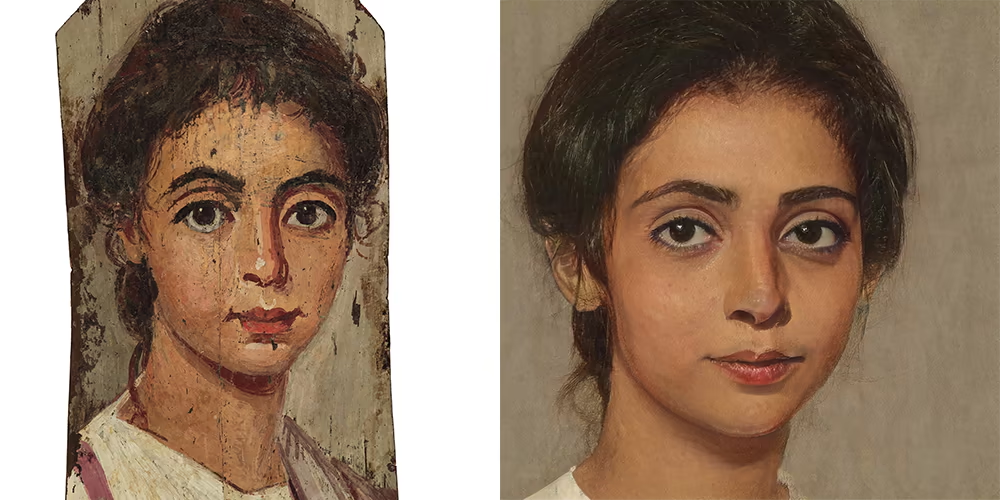
A photorealistic reinterpretation of a mummy portrait of a young woman, shown next to the original artifact.
A portrait of a young woman, painted with tempera on a wooden board.[4]
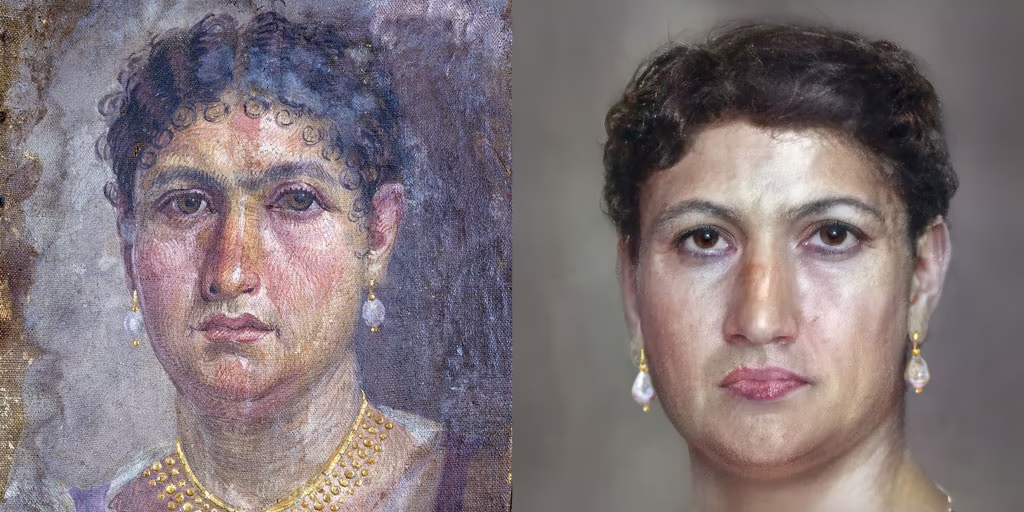
A photorealistic reinterpretation of the Portrait of Aline, shown next to the original artifact.
The "Portrait of Aline" from Hawara, Egypt, is unique in this set as it was painted with tempera on the linen mummy wrapping itself, not on a separate board.[5]
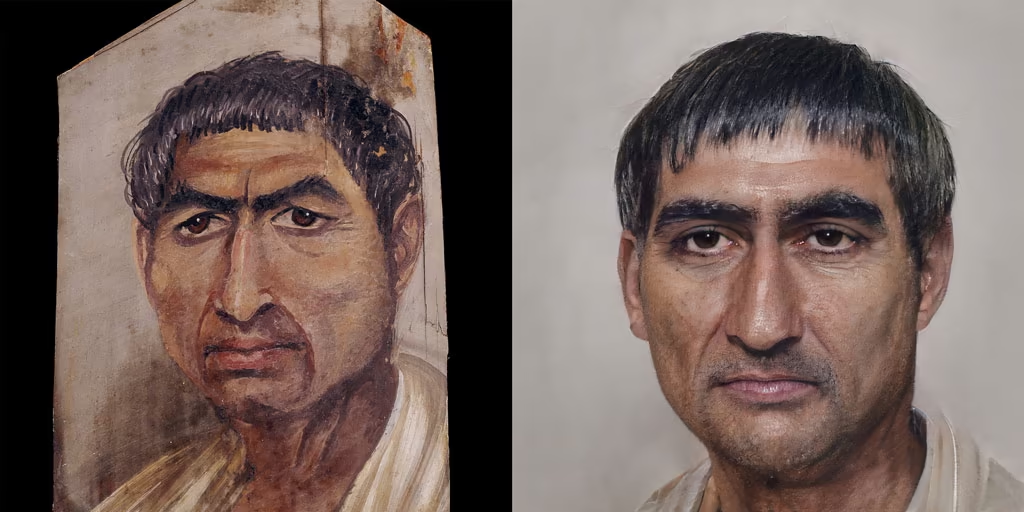
A photorealistic reinterpretation of a mummy portrait of a man with short hair, shown next to the original artifact.
This portrait of a man with short hair is dated to c. 110 AD and is held in the British Museum.[6]
A photorealistic reinterpretation of a painted lime plaster mummy-mask of a bearded man, shown next to the original artifact.
A painted lime plaster mummy-mask of a bearded man, also from the British Museum's collection.[7]
  1. Source: Altes Museum, Berlin, via Wikimedia Commons ↩︎

  2. Source: Altes Museum, Berlin, via Wikimedia Commons ↩︎

  3. Source: Altes Museum, Berlin, via Wikimedia Commons ↩︎

  4. Source: RetratosdelFayum.online ↩︎

  5. Source: State Museums of Berlin ↩︎

  6. Source: British Museum, via Wikimedia Commons and Wikimedia Commons ↩︎

  7. Source: British Museum Images ↩︎