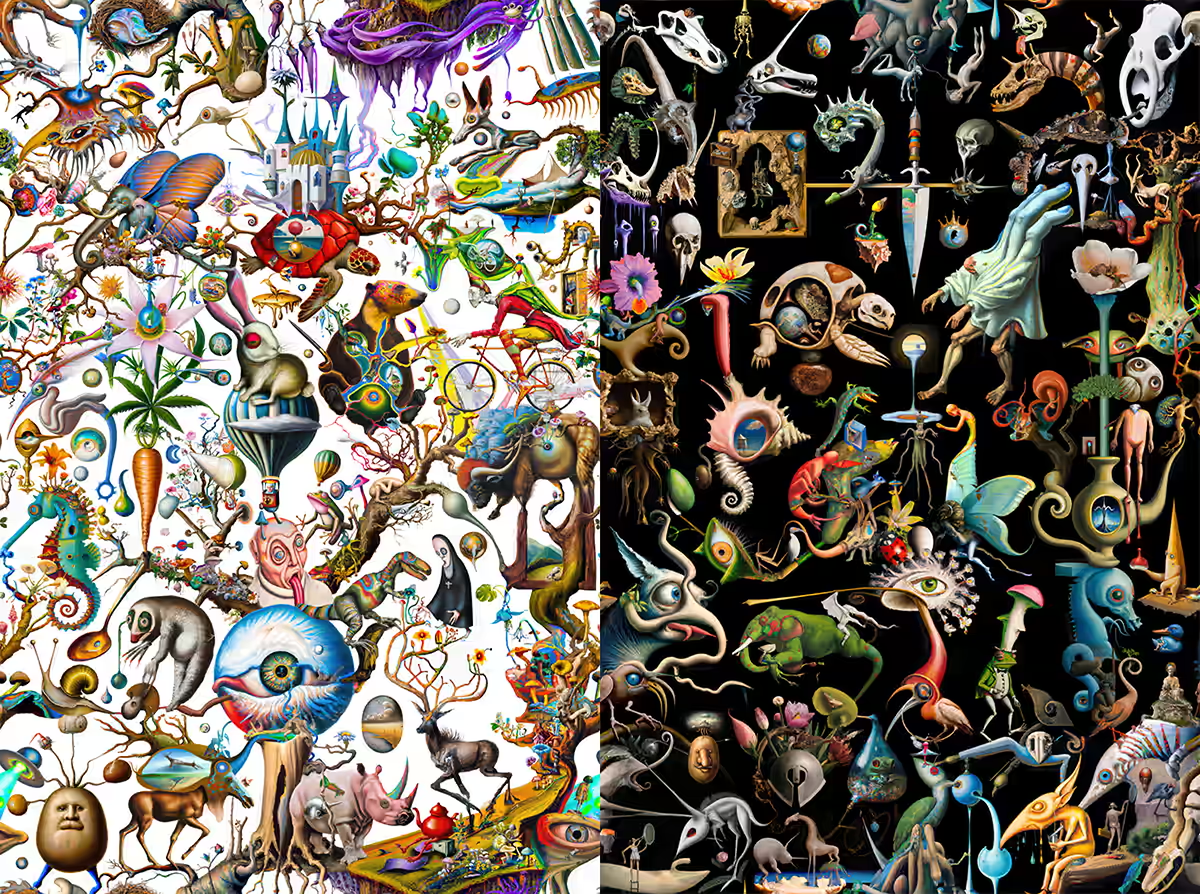
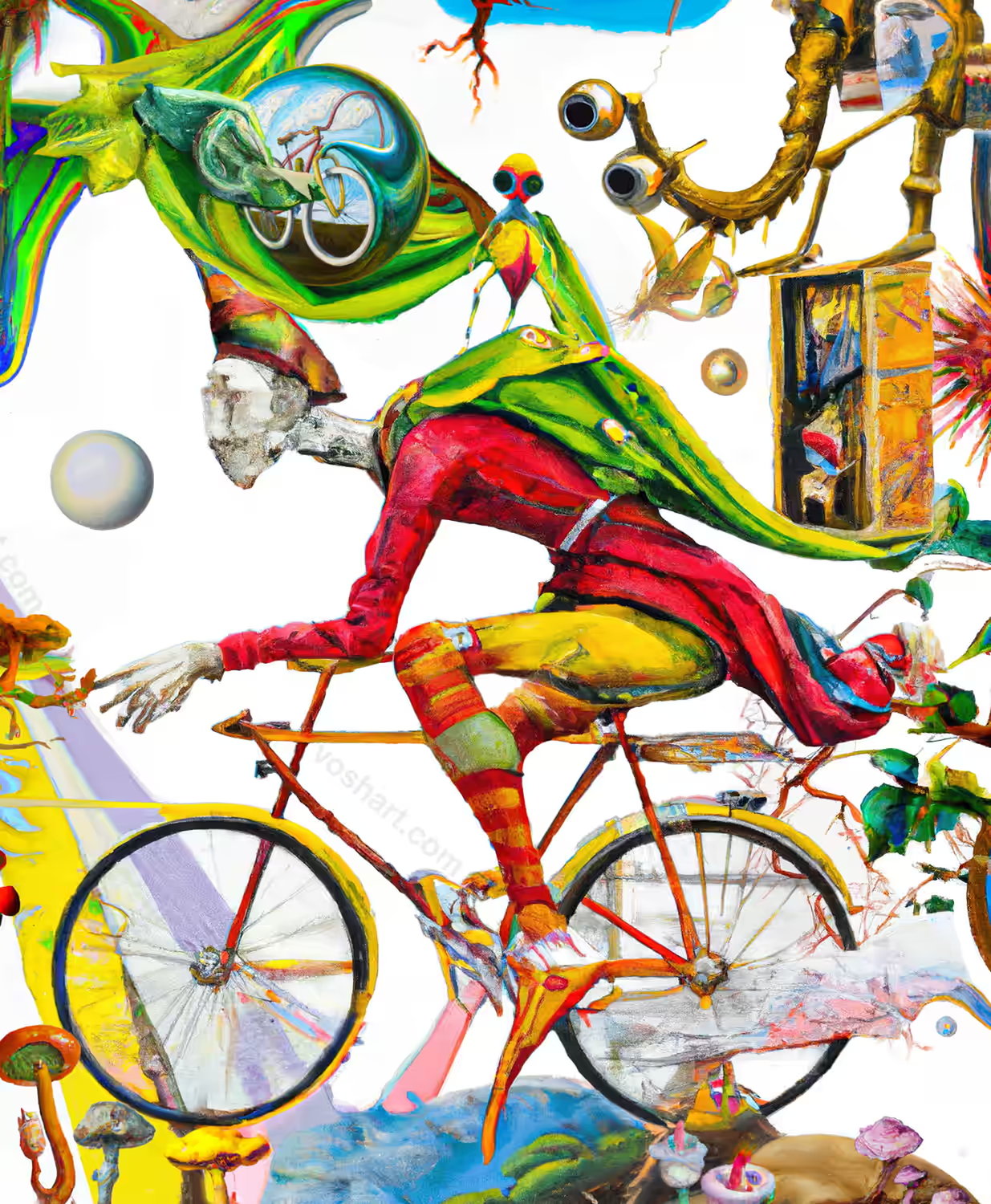
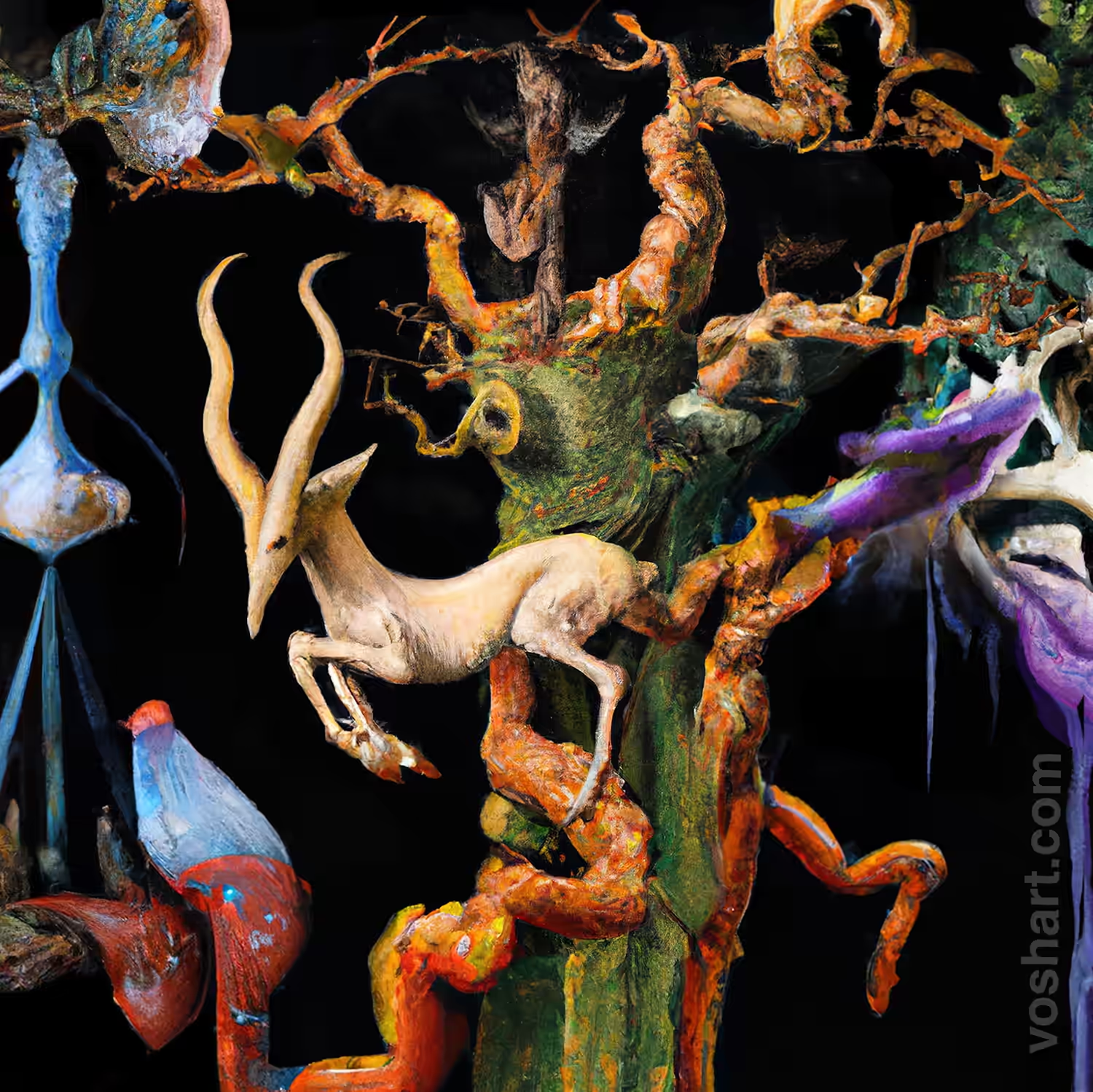
Originally shared on the short-lived Twitter alternative "Post News"
I broke my wrist a few months ago, so I relied on then-new machine learning models to keep “making art”.
Late July, an SUV hit me while I was in the bike lane. They didn’t look or signal as they turned right. I got a concussion, two fractures in my dominant wrist, road rash, etc. The driver was charged at the scene. Luckily only my wrist and helmet cracked. It could have been worse.
Prior to the accident, I was experimenting with text-to-image AIs: Wombo, Midjourney, Disco Diffusion, dalle2, and Stable Diffusion. None had much use in my role as Set Designer on Star Trek.
Too much digital garble
Intellectual property concerns (more on this later).
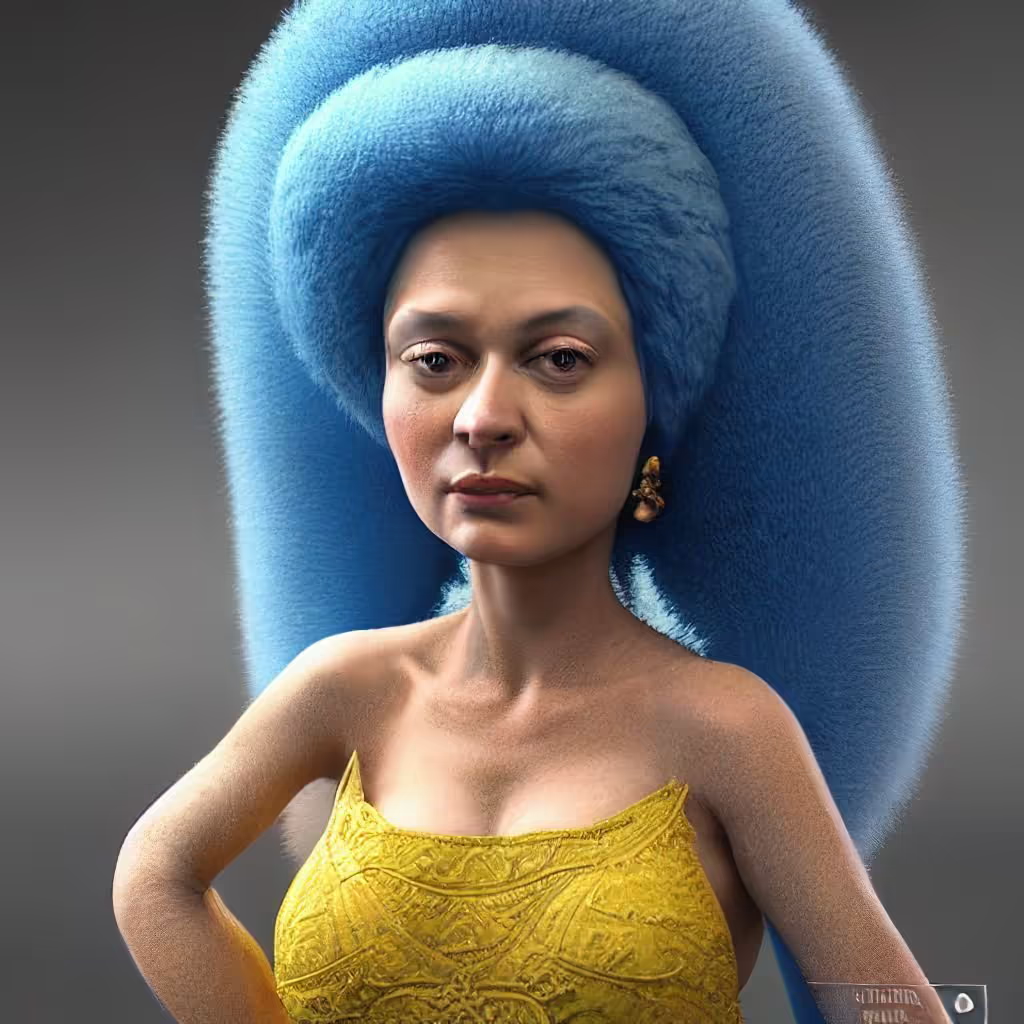
For these designs, I leaned into the uncanny/surreal strengths of the ai and aimed not to prompt living artists’ styles. I thought maybe I could sell the (seamless) pattern as a print or fabric or wallpaper. Things did not go quite as planned.
Each design cost me about $80 cad. The going rate for 200 unique prompts and 200 inpainting prompts on dalle-2. 80 bucks paid for roughly an hour of processing on a $20,000 graphics card. (Napkin math was 10 sec × 400 prompts × $0.20 per prompt) plus overhead.
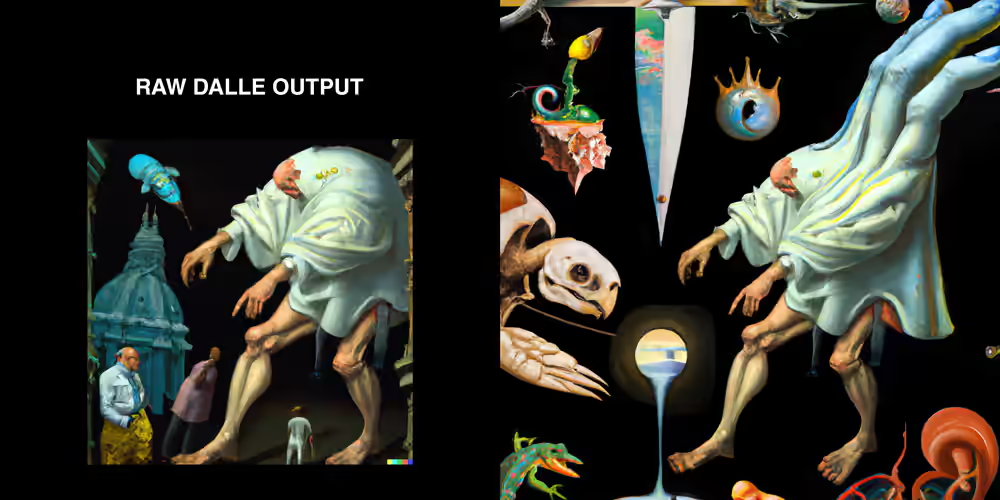
An example prompt was: “Renaissance painting of confused pope wearing shorts by “Hieronymus Bosch”…” (the full prompt was much longer). Inpainting allowed for modification/blending of parts of the design.
AI understanding is far less than a thousand words. You only get a sentence or two before the AI begins to ignore you. The overall creative process was more of steering a ship. I didn’t have the hand-eye coordination to fix anything the way I would normally. There were no dalle-2 plugins at the time they were made, so I created a Photoshop action that would crop & save the area I was working on, then adjust again for import at various sizes.
Ethical considerations grew as the project went on. One ethical lapse was my fault: I accidentally prompted the styles of living artists. Midway through, I checked. (Bolded names in public domain.)
Hieronymus Bosch (1450-1516)
Salvador Dalí (1904-1989)
Giorgio de Chirico (1888-1978)
John James Audubon (1785-1851)
Max Ernst (1891-1976)
Yves Tanguy (1900-1955)
Roger Dean (1944-)
Lawren Harris (1885-1970)
Remedios Varo (1908-1963)
André Masson (1896-1987)
Ithell Colquhoun (1906-1988)
Leonora Carrington (1917-2011)
Vladimir Kush (1965-)
Kadir Nelson (1974-)
Even after I began only prompting dead artists (generic genre prompts weren’t nearly as interesting), I had growing discomfort at the mysterious goings on of the AI.
I think my wrist breaking forced me to slow down and fully consider what I was doing. What images trained the AI? My Artbreeder work was trained on Nvidea’s ffhq dataset of 70,000 faces where “only images under permissive licenses were collected”.
Dall-E, Stable Diffusion and Midjourney, on the other hand, were trained on large databases like laion 5b (5 Billion). A broad sample of the whole internet, without permission from creators or respect for their image licensing terms, and ignoring requests to be removed.
laion 5b receives funding from Stable Diffusion and describes itself as “for research purposes”, but is being rebranded as some royalty-free panacea. My cynical take is that the nonprofit provides academic cover for the technocrats who want to gobble the entire internet. Cambridge Analytica for digital art theft?
Was I paying for transformative work… or to have intellectual property laundered? Users were finding watermarks or artists’ signatures. The realization was a bit of a ‘Soylent Green is People’ for me. Artists weren’t totally pulverized; you could occasionally find teeth in the food.
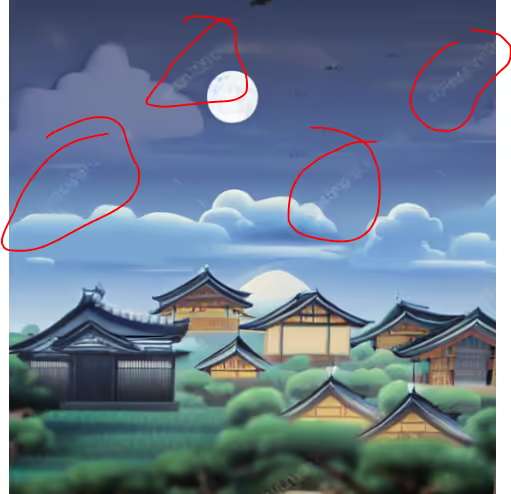
While no watermarks showed up in my particular prompts, examples of iStock, Getty, Dreamstime, Photoshelter and Shutterstock watermarks were cropping up online.
Sooooooo when Stable Diffusion produces an image with a ghosted copyright notice, it hints pretty strongly that there were copyrighted (or at least watermarked) images in the training data, right?
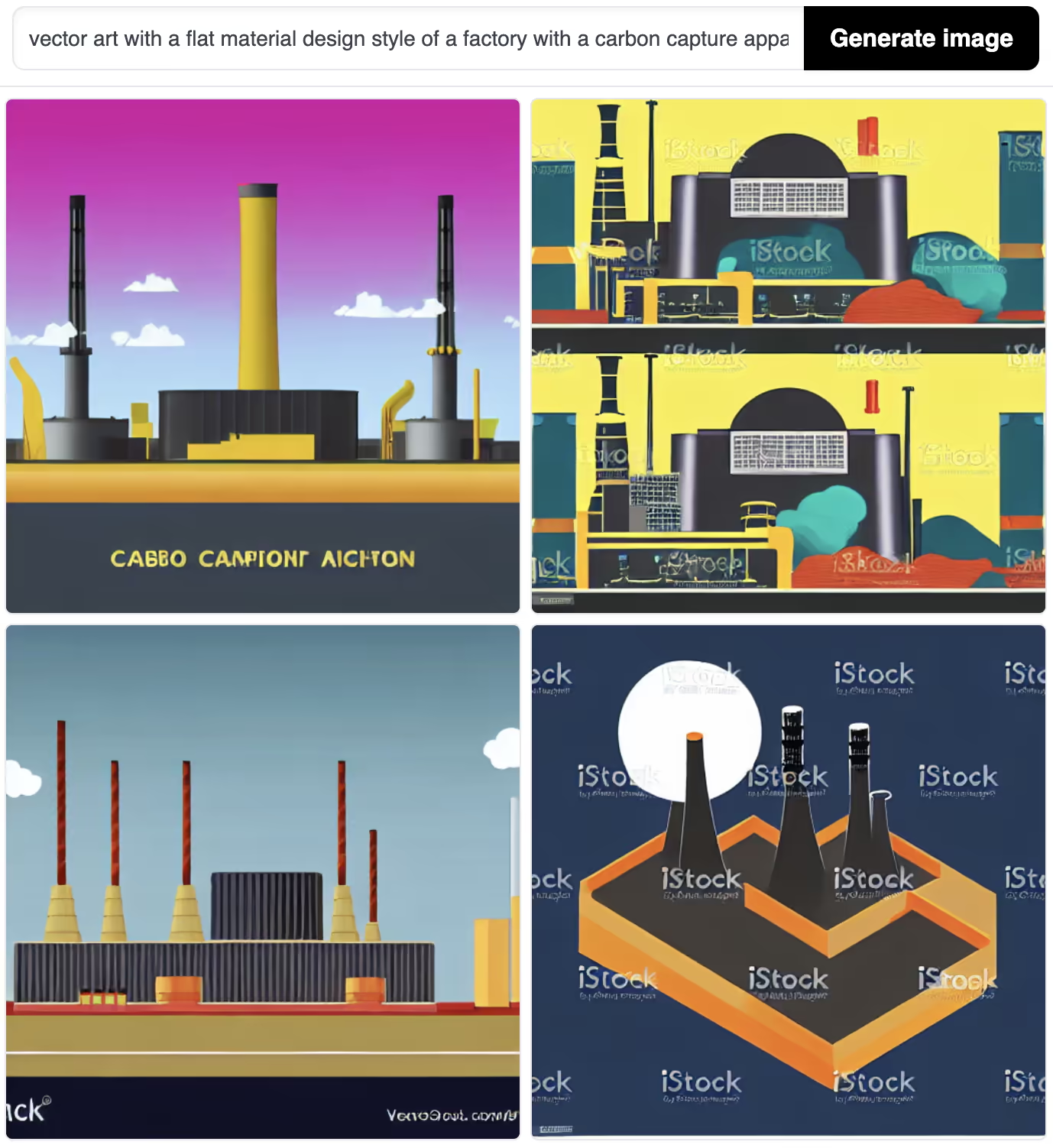
Looks like Stable Diffusion was trained on watermarked images - when asked for vector art, it put the iStockPhoto watermark all over it.
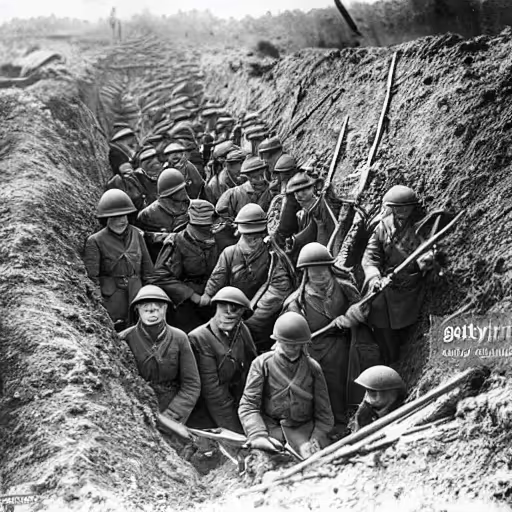
AI generates realistic WW1 trench image, but tries to include getty images watermark from reference material (OC)
Sure enough, millions of stock images were included in the dataset. From a 600M subset analysis of 5B by Twitter user @ummjackson there were:
6M Dreamstime
5M Getty
3M Photoshelter
1M Shutterstock
1M iStock
And millions from artist portfolio sites:
2.4M Flickr
1M DeviantArt
0.2M 500px
32K Artstation
(The 5B dataset likely has 10x of the above subsample)
Again, if an artist’s signature is in the AI result… has it been sufficiently transformed?
What makes this AI different is that it’s explicitly trained on current working artists. You can see below that the AI generated image (left) even tried to recreate the artist’s logo of the artist it ripped off. This thing wants our jobs, its actively anti-artist.
If an artist’s signature isn’t there… was it just cropped/processed out of the dataset? (Seems likely).
Internal testing among the disco Art Dept of Midjourney was showing results that were profoundly similar to existing concept artists in colour, composition and lighting, even without those concept artists being used in the prompt. A smaller team might not have noticed this.
I’m pro fair-use. The eff helped me defend my work where I parodied a bank’s marketing materials. I’m pro remixing/sampling of artists but what bothered me most was the lack of accountability and thought. AI developers seem to be dragging their feet around IP and artist consent. Both the Stable Diffusion founder and Midjourney CEO have used non-committal language like being “open to” an artist opt-out, but none have implemented it.
This is likely because it can cost well over $50k in compute each time you train these AIs.
The developers sometimes ignore journalists altogether. Kotaku’s Luke Plunkett wrote a feature story interviewing several professional artists raising concerns. Midjourney, Stable Diffusion and DALL-E teams did not respond to a request for comment.
The Stable Diffusion founder is a curious case. He is active on Twitter trying to sell his ideas of what art should be. He told me he’s working on a position paper. He also responded to a Reddit ama stating his interpretation of British law. An mit story quoted someone with a different interpretation.
AllRedLine_ wrote:
Do you have concerns regarding the legal/copyright status of the data these large models are trained on, or is it a case of “this is just what everyone does now”?
Emad Mostaque replied:
We have thought deeply on the legality of this and the end usage, you can see some of our poking on this in the UK legislative consultation for example: Link to gov.uk
The June 2022 UK report Emad linked to says text and data mining “is limited to non-commercial research” but suggested a change towards broader exemptions. Saying “For text and data mining, we plan to introduce a new copyright and database exception which allows [text and data mining] for any purpose. Rights holders will still have safeguards to protect their content, including a requirement for lawful access.”
The Stable Diffusion founder promoted a tutorial on making things that “don’t suck” which explicitly mentioned Greg Rutkowski, a prolific fantasy artist. But it seems Grzegorz Rutkowski is not enthusiastic about his newfangled fame. Searching his name on social media results in derivative AI art with his name in the prompt, but not his actual art.
My disillusionment grew as more details emerged. In a Forbes story by Rob Salkowitz, Greg called on government action.
“Garbage In, Garbage Out”
The quality of AI-generated art is entirely dependent on the quality of the data it’s trained on. The developers of these models know this. According to laion’s own self-assigned aesthetic scores, less than 0.2% of the 5.8 billion images in its dataset are rated 8 out of 10 or higher. The “Art” subset contains only 8 million images, and a mere 120,000 are rated 9 or above.
In my experience, removing the names of high-quality artists from a prompt and using generic terms instead (e.g., “Fantasy Art” instead of “Rutkowski”) results in less interesting, more generic outputs. The quality is tied to the “good” data, which is often the work of specific artists.
Intellectual Property Laundering
This next part stinks of derivative markets. It reminds me of when Mark Zuckerberg called his early users “dumb f***s.”laion recently released a “Simulacra dataset,” which it describes as “Universal Public Domain.” What they’ve actually done is launder intellectual property twice. They have taken their ethically questionable 5-billion-image dataset, used it to generate new images, and then repackaged these “new” shady assets by labeling them as public domain.
Sure enough, days later, the founder of Stable Diffusion stated they would no longer need to train on the work of living artists to make anything they want. The fine print, of course, is that they will probably just be trained on this new “Simulacra” dataset, which is derived from the original, unethically sourced images. If you generate 5 billion “new” images from a 5-billion-image dataset, is it fair use? It seems highly questionable.
The Possibility of Opting Out
There are some emerging ways for artists to fight back. A group called Spawning is promising a tool to help artists find their work and remove themselves from these datasets. For European citizens, gdpr laws provide a legal framework to request that their data be removed from the LAION dataset, which could be effective in the short-term since all major AI teams use it.
Final Conclusion
In summary, I spent a month creating art which the AI company I paid says I have full commercial rights to. But after careful consideration, I can’t ethically sell it.
I look forward to a time when a version of this AI is trained on ethically sourced images. Thanks for reading.
***
Correction from original thread: There are only 42,000 images scraped directly from the ArtStation domain, but the amount of content is likely much higher due to the 30 million images scraped from Pinterest, which re-posts a great deal of ArtStation content.