Originally published on Linebox’s Blog
People in Virtual Reality (VR) present a unique challenge for architects and their clients. Cutouts look phony, ‘realistic people’ use tens of thousands of polygons and their pose -frozen in time- makes them look uncanny.
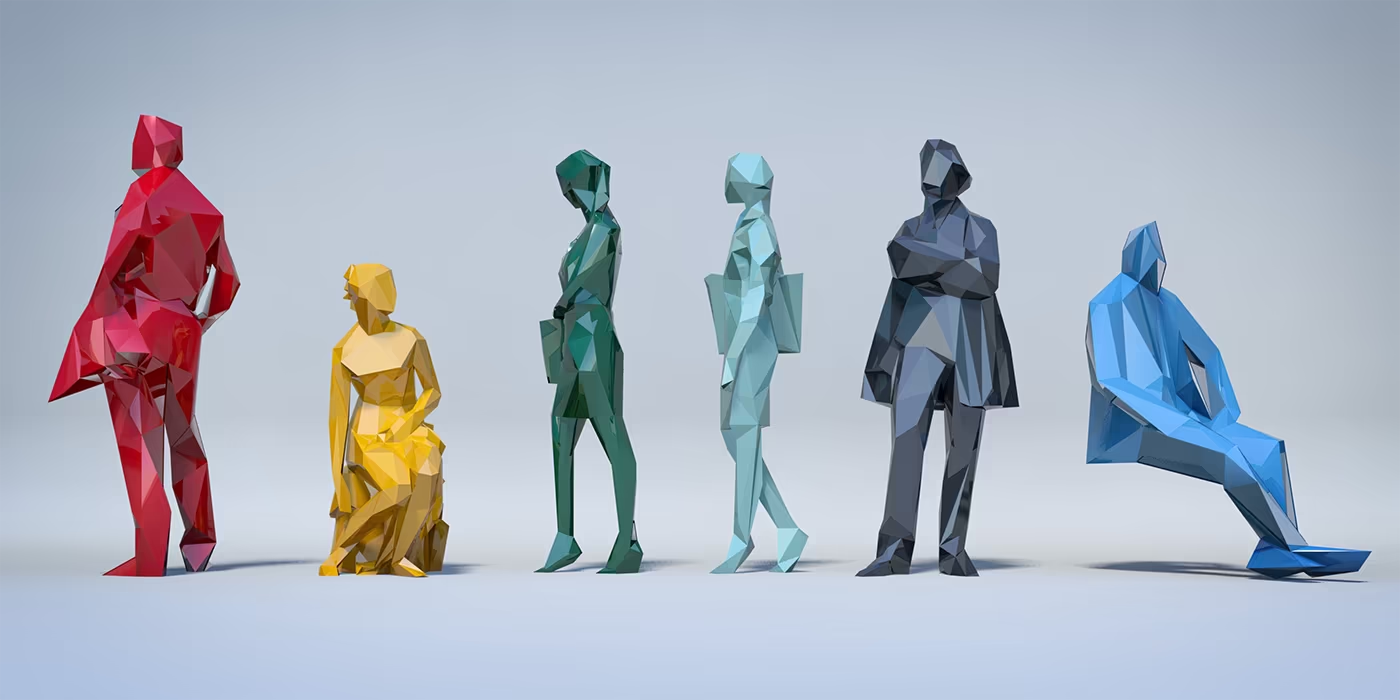
Our solution is to have colourful, low-poly digital sculptures inspired by french artist Xavier Veilhan who has built a career on triangulating 3D scans of friends, architects and other notable figures. While Xavier might build them from wood, concrete or welded sheet metal we’ve stayed digital.
We are not just using random people. The man in black happens to be the man who patented the “photosculpture”, a strategy of using an array of photographs to make lifelike sculptures. Watch as this 3.5million polygon scan gets prepped for VR.