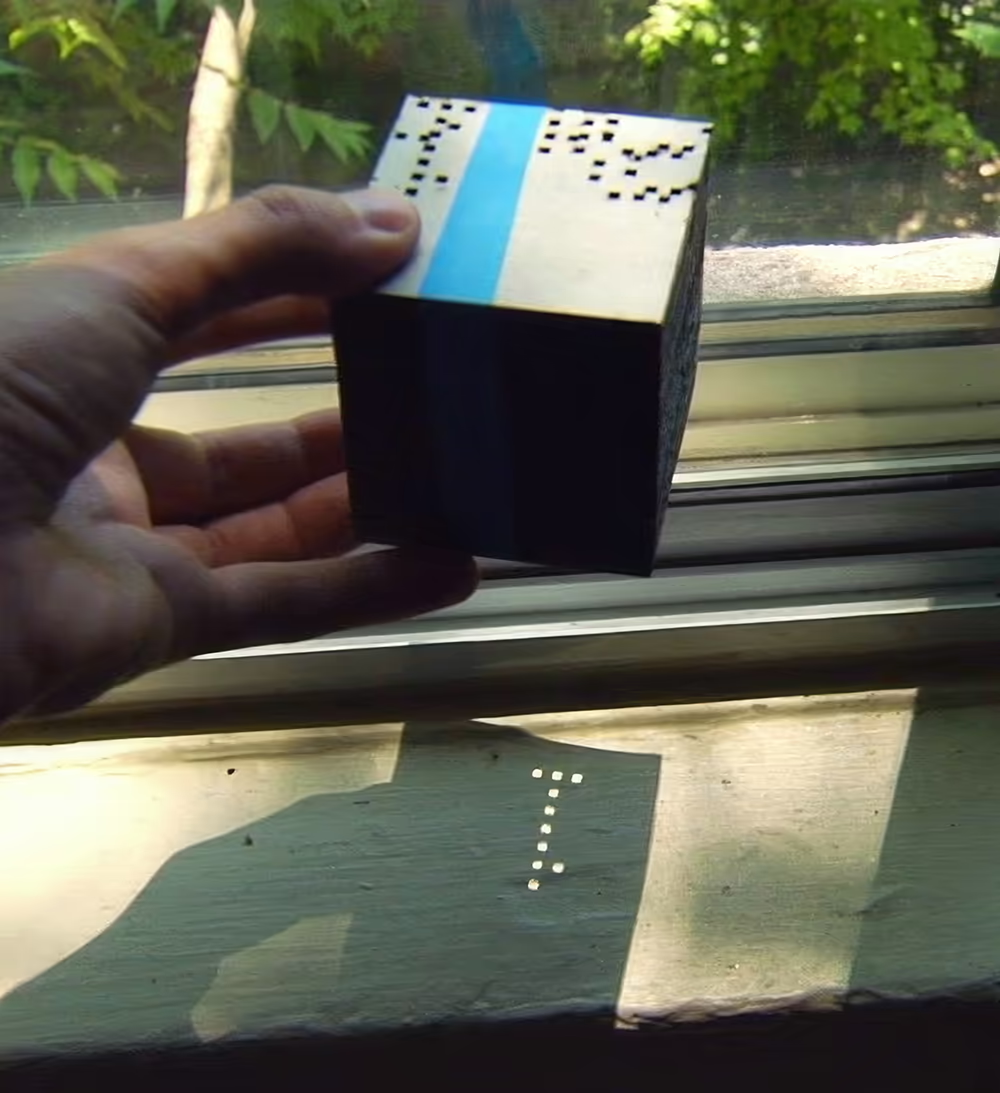
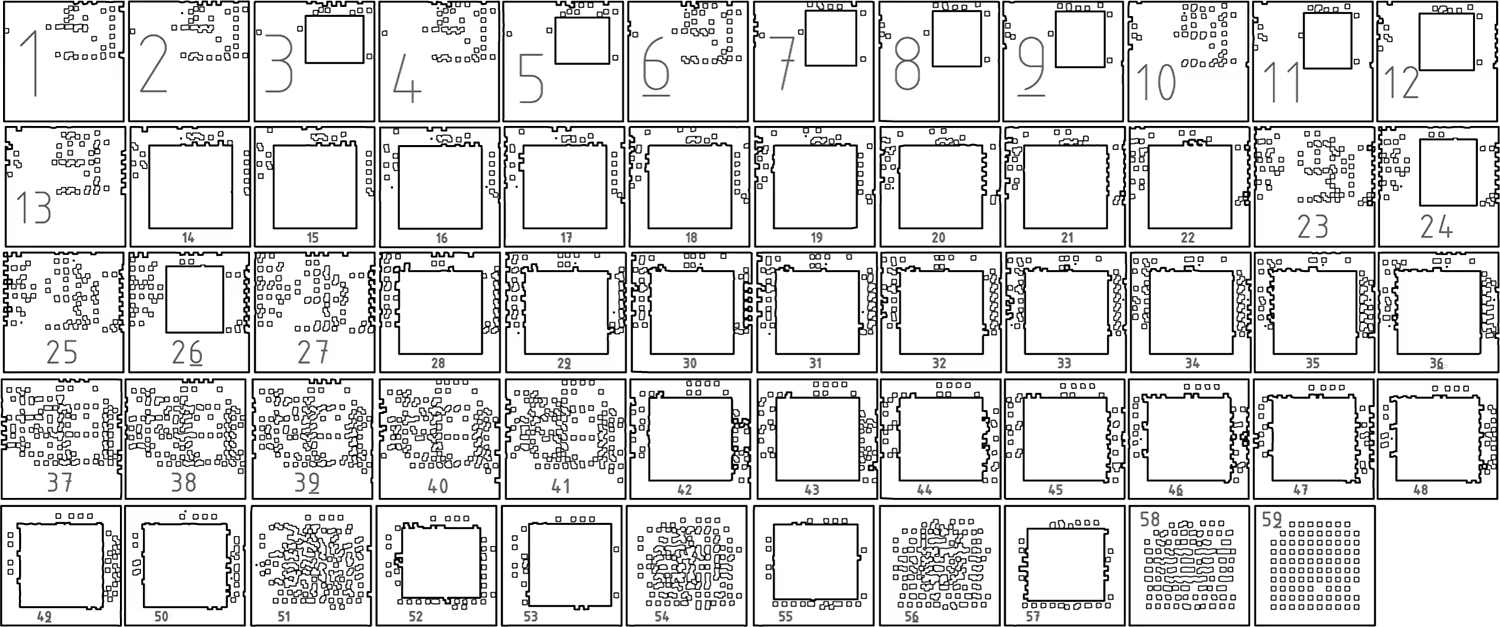
Light passes through tunnes in the cube to project the time. The first prototype was made from 59 stacked, laser-cut plates and contains no electronics.
The North American Sundial Society compared its design to the Japanese art of Chindōgu.[1] A half compliment because the art is known for being a mix of ingenuity and impracticality.
The design is highly specific. To be accurate, its calculations must account for the Equation of Time and the location’s longitude. As a result, a single design works for about 15 days and within a latitudinal band of ~100 miles (+/- 50 miles). The first prototype was created specifically for my father’s birthday.
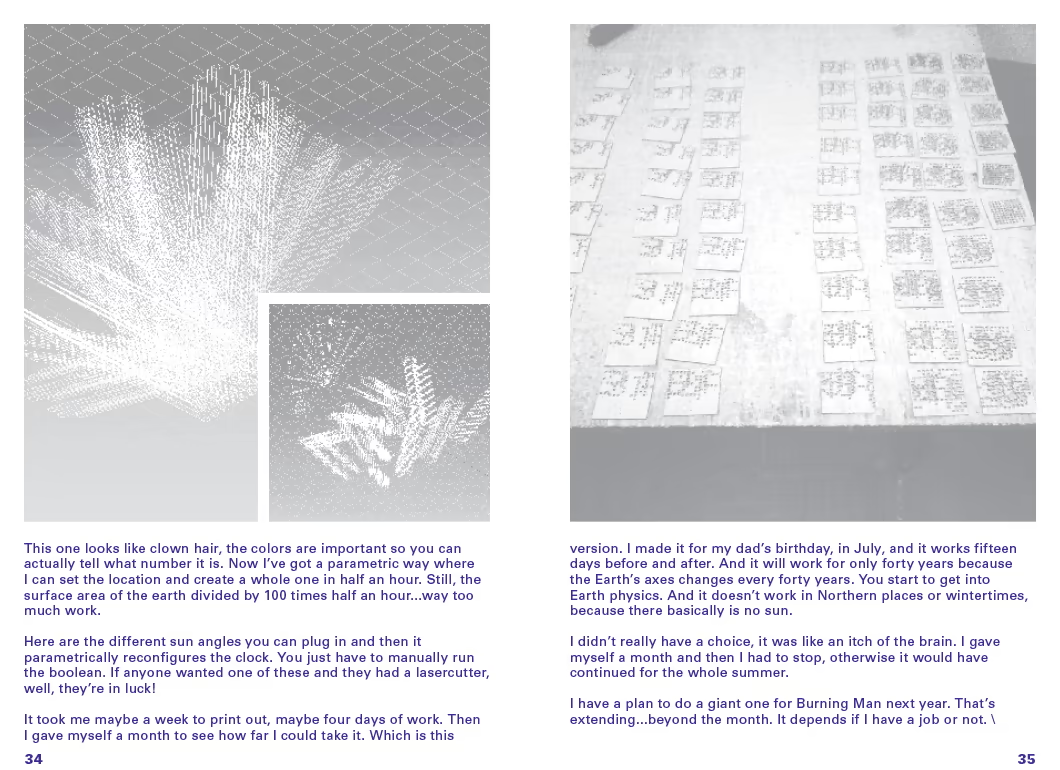
The project was featured by Gizmodo[2] and The Daily Mail,[3] and was originally documented in Placeholder Magazine.[4]
The initial prototype was difficult to adapt to new locations and times of year. A brittle sequence of adjustments and boolean operations which took 30 minutes. The design was later revisited three years later and made fully parametric, cutting that time to just a few minutes.[5]

North American Sundial Society, “Digital Cube Beams Time”, NASS Compendium. ↩︎
Adam Clark Estes, “This ‘Digital’ Sundial Tracks the Sun Through a Laser-Cut Cube”, Gizmodo, March 20, 2014. ↩︎
Jonathan O’Callaghan, “A 21st century sundial: Laser-cut ‘digital’ clock uses Earth’s rotation to tell the time”, The Daily Mail, March 19, 2014. ↩︎
Daniel Voshart, “The Opposite of Improvement”, Placeholder Magazine, 2014. Archived Link. ↩︎
Daniel Voshart, “Revisiting a 2014 project…”, X, July 28, 2019. ↩︎